The Lease You Sign Today Could Cost You Everything Tomorrow
A new retail location represents opportunity. It may also represent one of the largest legal and financial risks your business will ever assume.
Every week, business owners spend months selecting the perfect location, negotiating rent, designing build-outs, purchasing inventory, and planning grand openings. Yet many spend less than an hour reviewing the lease they are about to sign.
That lease is not a simple rental agreement.
It is a sophisticated legal contract drafted almost entirely for the benefit of the landlord.
Once signed, many of its provisions remain enforceable for years—even if your business struggles, the economy changes, or circumstances beyond your control make the location unprofitable.
At The Moster Law Firm, we frequently review commercial leases after problems arise. Unfortunately, by then many of the most damaging provisions cannot simply be undone. A modest investment in attorney review before signing often prevents years of litigation and potentially hundreds of thousands of dollars in losses.
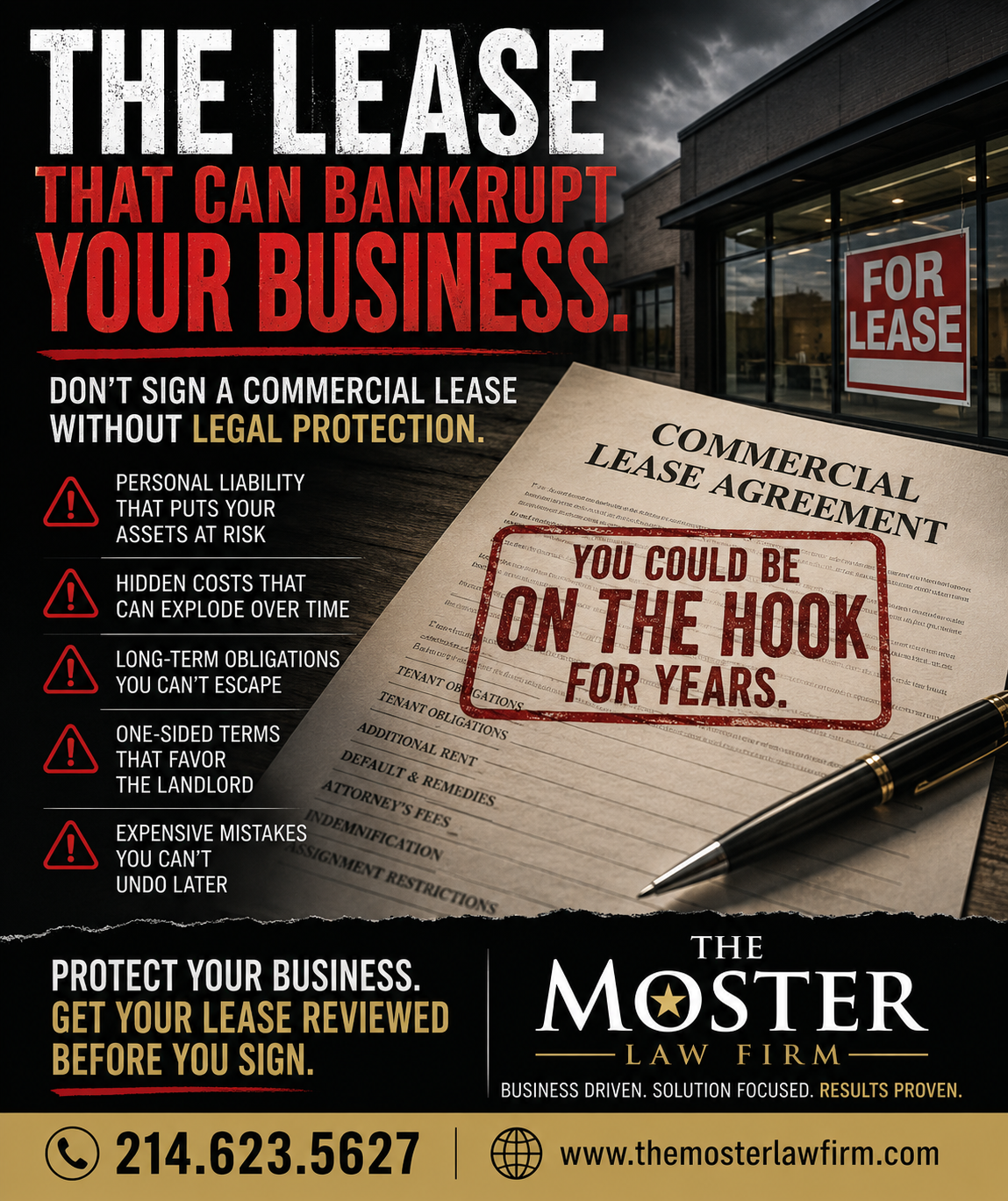
- The Personal Guaranty Can Put Your Family’s Assets at Risk
Many landlords require the owner of a business to personally guarantee the lease.
Business owners often believe operating through an LLC or corporation protects their personal assets. A personal guaranty can eliminate that protection with a single signature.
If the business fails, you may remain personally responsible for years of rent, attorney’s fees, operating expenses, damages, and collection costs. Your personal bank accounts, investments, and other assets may become exposed.
Whenever possible, negotiate to eliminate the guaranty entirely or significantly limit its duration and amount.
- Long-Term Lease Obligations Can Become Financial Traps
Businesses evolve.
Customer traffic changes.
Economic conditions change.
Shopping centers decline.
Yet many leases lock tenants into obligations lasting five, ten, or even fifteen years.
Without carefully drafted exit provisions, you may remain obligated to pay rent long after your business has closed.
An attorney should evaluate:
- Early termination rights
- Assignment provisions
- Sublease rights
- Buyout options
- Renewal provisions
- Default remedies
- Triple-Net Expenses Are Often Much More Than Rent
Many tenants focus exclusively on monthly rent.
Then the invoices begin arriving.
Common Area Maintenance (CAM) charges.
Property taxes.
Insurance.
Capital improvements.
Administrative fees.
Management fees.
Security.
Parking lot repairs.
Roof expenses.
Landscaping.
Suddenly the actual occupancy cost is dramatically higher than expected.
An attorney can review whether these expenses are properly defined, capped, allocated fairly, and subject to audit rights.
- Build-Out Responsibilities Must Be Crystal Clear
Many retail businesses require significant tenant improvements.
Who pays?
Who owns the improvements?
Who obtains permits?
Who bears responsibility if construction is delayed?
Can the landlord require restoration when the lease ends?
Poorly drafted improvement clauses frequently become major sources of disputes costing tens or even hundreds of thousands of dollars.
- Exclusive Use Clauses Protect Your Investment
Imagine investing hundreds of thousands of dollars opening a specialty business.
Six months later, your landlord leases the neighboring space to your largest competitor.
Without an exclusive use provision, there may be little you can do.
Retail tenants should carefully evaluate whether they need contractual protection against competing businesses within the same development.
- Default Provisions Are Often Extremely One-Sided
Commercial leases frequently allow landlords to declare default for relatively minor technical violations.
Missed notice deadlines.
Late rent by only a few days.
Insurance paperwork.
Maintenance issues.
Improper signage.
Some leases permit acceleration of every remaining rent payment, immediate attorney’s fees, lockouts, eviction proceedings, and seizure of security deposits.
These provisions deserve careful legal scrutiny before signing.
- Hidden Repair Obligations Can Cost a Fortune
Many tenants assume the landlord maintains the building.
Sometimes that assumption is completely wrong.
Certain leases require tenants to repair:
- HVAC systems
- Roofs
- Parking lots
- Structural components
- Plumbing
- Electrical systems
Unexpected repair obligations can devastate a growing business.
- Assignment and Sale Restrictions Can Reduce the Value of Your Business
Someday you may wish to sell your business.
Many commercial leases prohibit transfers without landlord approval.
Others allow landlords to terminate the lease entirely if the business is sold.
Some even require landlords to receive part of the sale proceeds.
These restrictions directly affect the value and marketability of your company.
- Insurance and Indemnity Provisions Shift Significant Liability
Commercial leases often require tenants to indemnify landlords for broad categories of claims.
The language may extend well beyond your insurance coverage.
A single lawsuit could expose your business to liabilities you never intended to assume.
These provisions should always be reviewed together with your insurance policies.
- Attorney’s Fee Clauses Matter More Than You Think
Many leases require only the tenant to pay attorney’s fees.
Others require prevailing-party fees.
Some contain broad cost-shifting provisions that substantially increase litigation exposure.
The wording matters.
The Cost of Prevention Is Almost Always Less Than the Cost of Litigation
One of the most common statements we hear is:
“I wish someone had reviewed this before I signed it.”
Commercial landlords negotiate leases every day.
Most business owners do not.
That imbalance matters.
An experienced attorney can identify dangerous provisions, negotiate more favorable terms, eliminate unnecessary personal liability, and protect your business before problems arise.
The goal is not simply to sign a lease.
The goal is to sign the right lease.
Contact The Moster Law Firm
Before committing yourself or your business to a long-term commercial lease, let our attorneys review the agreement and identify hidden risks before they become expensive legal problems.
The Moster Law Firm represents business owners throughout Texas in commercial lease negotiations, construction contracts, real estate disputes, and complex business litigation.
214.623.5627
www.themosterlawfirm.com